
The Science Behind Stopping Distance - And Why Drivers Consistently Underestimate It
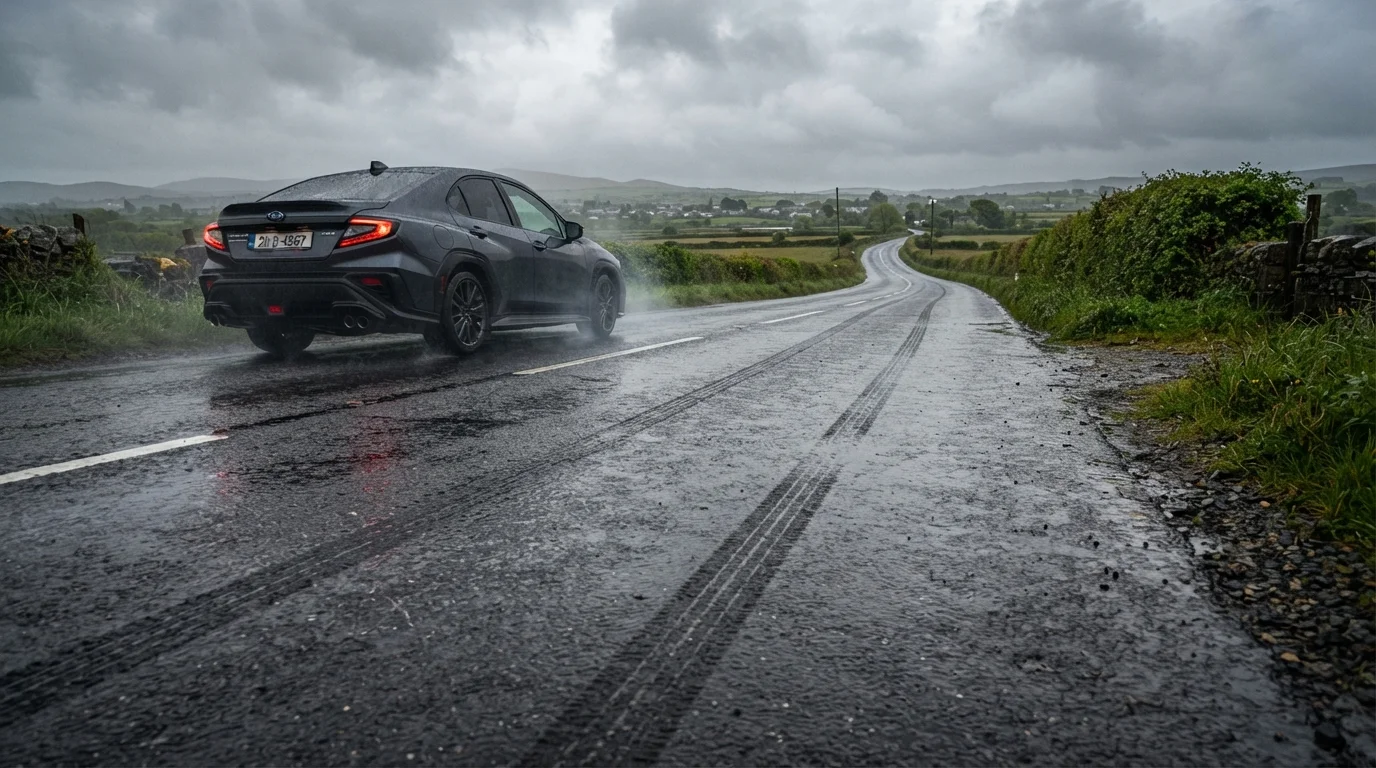
Photo credit: SkripTee.com | Search. Explore. Learn.
In this article
Reaction time, braking force, and road conditions all factor into how far a car travels before stopping. Most drivers underestimate the gap.
Key Takeaways
- Stopping distance has two parts: reaction distance and braking distance - both matter equally.
- At 60 mph, a typical car may need more than 240 feet to stop under ideal conditions.
- Speed has a disproportionate effect - doubling speed roughly quadruples braking distance.
- Wet, icy, or degraded road surfaces can multiply stopping distances significantly.
- Fatigue, distraction, and impairment all extend reaction time - often without the driver noticing.
- Maintaining safe following distance is the most practical way to account for stopping distance in real driving.
Two Forces, One Number: How Stopping Distance Is Calculated
Stopping distance is not a single event - it is the sum of two distinct phases. Understanding each phase separately makes it easier to see where drivers lose ground.
Reaction distance is the distance your vehicle travels between the moment you perceive a hazard and the moment your foot actually depresses the brake pedal. The average human reaction time under alert, unimpaired conditions is roughly 1.5 seconds. At 60 mph, your vehicle travels approximately 132 feet in that window - before braking has even started.
Braking distance is what follows: the distance the car continues to travel while the brakes are actively slowing it. This is governed by the laws of physics. Kinetic energy - the energy of a moving object - must be dissipated by friction between the brake pads and rotors, and between the tyres and road surface. The more speed involved, the more energy must be shed, and the relationship is not proportional. Because kinetic energy increases with the square of velocity, braking distance rises steeply as speed increases.
Added together, reaction distance and braking distance produce total stopping distance. At 60 mph under dry, ideal conditions, that total can easily exceed 240 feet - roughly the length of eight standard parking spaces laid end to end.
240+ ft
Typical stopping distance at 60 mph
Under ideal dry-road conditions, most passenger vehicles require more than 240 feet to stop from 60 mph, combining reaction and braking distance.
4x
Braking distance increase when doubling speed
Because kinetic energy grows with the square of velocity, doubling speed roughly quadruples the braking distance required to stop.
50%+
Increase in braking distance on wet roads
Wet asphalt significantly reduces tyre-to-road friction, with stopping distance increasing by at least 50% in many conditions compared to dry pavement.
1.5 sec
Average driver reaction time under alert conditions
Traffic safety research commonly cites 1.5 seconds as a baseline reaction time for an alert, unimpaired driver - a figure that rises with fatigue and distraction.
Why Drivers Consistently Get This Wrong
Research in traffic psychology consistently shows that drivers underestimate how far they travel before stopping. Several cognitive factors work against accurate self-assessment.
Linear thinking: Human intuition tends to assume that doubling speed doubles stopping distance. The actual relationship - where braking distance increases with the square of speed - is counterintuitive. A driver who knows it takes 60 feet to stop at 30 mph may unconsciously assume 120 feet is sufficient at 60 mph. The actual braking distance at 60 mph is closer to 240 feet.
Optimism about reaction time: Most drivers believe their reactions are faster than average. In practice, reaction time is impaired by distraction, fatigue, and even mild dehydration in ways that are not subjectively detectable. Even a brief glance at a phone screen can add a full second or more to reaction time - adding nearly 90 feet at highway speeds.
Driver fatigue compounds this problem significantly. A tired driver's reaction time can approach or exceed that of a legally impaired driver, yet fatigue rarely feels as acute as it truly is.
“The greatest source of danger on the road is not recklessness - it is the gap between what drivers believe their vehicle can do and what physics actually permits.”
— National Safety Council, U.S. nonprofit organization focused on workplace and road safety
How Road and Vehicle Conditions Change the Equation
The stopping distances above assume ideal conditions: dry asphalt, properly inflated and road-legal tyres, fully functional brakes, and a physically alert driver. In practice, multiple variables can push those numbers substantially higher.
Surface friction: Wet roads reduce tyre grip, often increasing braking distance by 50% or more. Ice can reduce available friction by as much as 80%, making stopping distances in freezing conditions dramatically longer than most drivers anticipate. Driving in heavy rain presents an additional complication - hydroplaning can cause tyres to lose contact with the road surface entirely, rendering braking almost ineffective.
Tyre condition: Worn tread depth reduces the tyre's ability to channel water and maintain grip. A tyre at the legal minimum tread depth performs significantly worse in wet conditions than one at full tread depth. Underinflation also affects contact patch geometry and heat buildup, degrading braking performance.
Brake health: Worn brake pads or warped rotors reduce the friction force applied to slow the wheels. Gradual brake wear tends to go unnoticed by drivers because performance degrades incrementally. Regularly scheduled brake inspections - typically part of standard maintenance intervals - help catch deterioration before it becomes a safety issue. Habits that quietly shorten a car's lifespan include riding the brakes habitually, which accelerates pad and rotor wear over time.
Check Your Tyres and Brakes Regularly
Tyre tread depth and brake pad condition directly affect how quickly your vehicle can stop. Most automotive professionals recommend inspecting tyre tread and brake components at each oil change interval or at least twice a year. Catching gradual wear early keeps your stopping distances as short as your vehicle is capable of achieving.
Translating Awareness Into Safer Driving Habits
Understanding stopping distance is useful only if it informs actual driving behaviour. The most direct application is following distance.
The three-second rule is a practical way to maintain adequate spacing: choose a stationary object on the roadside, and count the seconds between when the vehicle ahead passes it and when you do. Three seconds provides a reasonable baseline in good conditions. In rain, low visibility, or fatigue, extending to four or five seconds is appropriate. Tailgating - following too closely - is one of the most common and underappreciated factors in rear-end collisions.
Speed management is equally important. Driving even 5 mph below posted limits in poor visibility or adverse weather can meaningfully reduce the energy your brakes must dissipate. Night driving poses a particular challenge - headlight range may be shorter than total stopping distance at highway speeds, meaning a driver could be unable to stop before reaching an obstacle even with adequate reaction time.
Ultimately, the margin for error on the road is thinner than most drivers intuit. Knowing the physics - and adjusting behaviour accordingly - is the most straightforward way to widen that margin.
ABS Does Not Always Shorten Stopping Distance
Anti-lock Braking Systems (ABS) prevent wheel lockup and help maintain steering control during hard braking - a meaningful safety advantage. However, on loose gravel or deep snow, ABS can sometimes result in longer stopping distances than locked wheels would produce. ABS is designed to preserve control, not to guarantee the shortest possible stop in every surface condition.
Frequently Asked Questions

Author
Autos Editorial Team
Autos Editorial Team is the collective byline for our editorial team and contributor network. Articles published under this byline or an editorial pen name are researched, written, and reviewed according to our editorial standards for clarity, consistency, and independence before publication.
View all articles →