
Large Group Dining: The Logistics Most People Forget to Plan
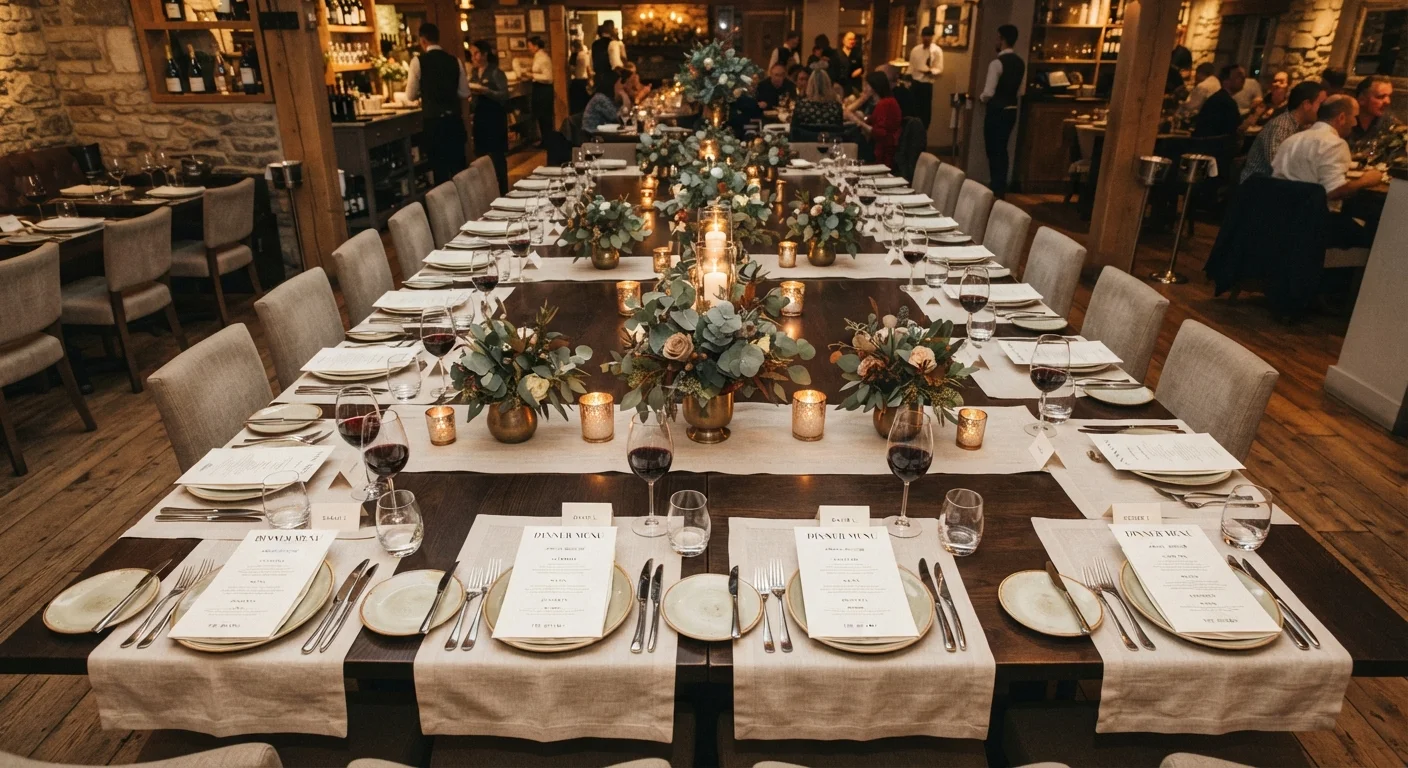
Photo credit: SkripTee.com | Search. Explore. Learn.
In this article
Organising a meal for eight or more involves more than picking a place. Cover the details that make group dining smooth for everyone.
Key Takeaways
- Confirm private or semi-private seating arrangements at least two weeks in advance for groups of eight or more.
- Collect dietary restrictions and allergies from all guests before contacting the restaurant.
- Agree on a payment method before the meal to avoid end-of-dinner confusion.
- Confirm whether gratuity is automatically added for large parties before ordering.
- Designate a single point of contact to manage communication with restaurant staff throughout the event.
Why Group Dining Needs a Different Playbook
Booking a table for ten feels like it should be a scaled-up version of booking for two. In practice, it's a different kind of coordination entirely. Restaurants manage large parties under different operating conditions - dedicated sections, prix-fixe or limited menus, minimum spend requirements, and service timelines that don't match the à la carte rhythm most diners expect.
If your group dining experiences have repeatedly fallen short, common overlooked habits are often the culprit. For groups, those gaps are amplified. One unresolved dietary need, one ambiguous payment plan, or one miscommunication about arrival time can derail a meal for a dozen people at once.
This checklist covers the logistical details most group organizers skip - not the obvious ones like making a reservation, but the specifics that determine whether the evening actually works.
Never Relay Allergy Information Verbally Only
For guests with serious food allergies, verbal communication at the table is not sufficient. Confirm allergy details with the restaurant in writing before the meal - by email or through their booking platform - and reiterate them with your server when you arrive. Cross-contamination risks require kitchen-level awareness that front-of-house staff alone cannot always guarantee.
Before You Book: Laying the Groundwork
The most consequential decisions happen before you call a restaurant. Knowing your group's needs in advance lets you find a venue that can genuinely accommodate everyone - rather than discovering mid-meal that the kitchen can't handle three gluten-free orders and a severe shellfish allergy simultaneously.
If allergies are part of the picture, review strategies for communicating dietary restrictions to restaurant staff before your booking conversation. For groups, that communication becomes the organizer's responsibility to consolidate and relay clearly.
Pre-Booking Groundwork
Reservation and Venue Logistics
Communication and Coordination
Payment and Gratuity Planning
Night-Of Management
At the Restaurant: Managing the Experience in Real Time
Even with thorough preparation, group meals require active management on the night. Service for large tables operates differently - courses may arrive in waves, drink orders can lag, and the server-to-guest ratio is rarely as favorable as it is for smaller tables. Understanding how a well-paced meal is designed to flow helps you set realistic expectations and guide your group accordingly.
Budget-conscious groups should also plan ahead: smart ordering habits and menu navigation matter even more when multiplied across a large table.
Automatic Gratuity Can Catch Groups Off Guard
Many restaurants apply an automatic service charge - typically 18-20% - to parties above a certain size, often six or more. This charge may not be prominently displayed on the menu. Confirm the policy when booking, and communicate it to guests who plan to pay individually so they factor it into their budget.
Deposits and Late Cancellations Carry Real Costs
Some venues require a non-refundable deposit to hold a large-group reservation, and cancellations within a set window may trigger per-head fees. Read the cancellation policy carefully before confirming, and share the terms with your guests so they understand the commitment involved.
Group messaging app or email thread
Centralizes communication with all guests for RSVPs, dietary surveys, and logistics updates.
Shared digital document
Tracks guest dietary restrictions, confirmed headcount, payment agreements, and venue details in one accessible place.
Payment-splitting app
Simplifies cost distribution among guests if the group opts to split the bill individually.
Restaurant's set menu (requested in advance)
Allows guests to review food options and flag concerns before arriving, reducing delays during ordering.

Author
Food Editorial Team
Food Editorial Team is the collective byline for our editorial team and contributor network. Articles published under this byline or an editorial pen name are researched, written, and reviewed according to our editorial standards for clarity, consistency, and independence before publication.
View all articles →