
The Anatomy of a Well-Structured Restaurant Meal
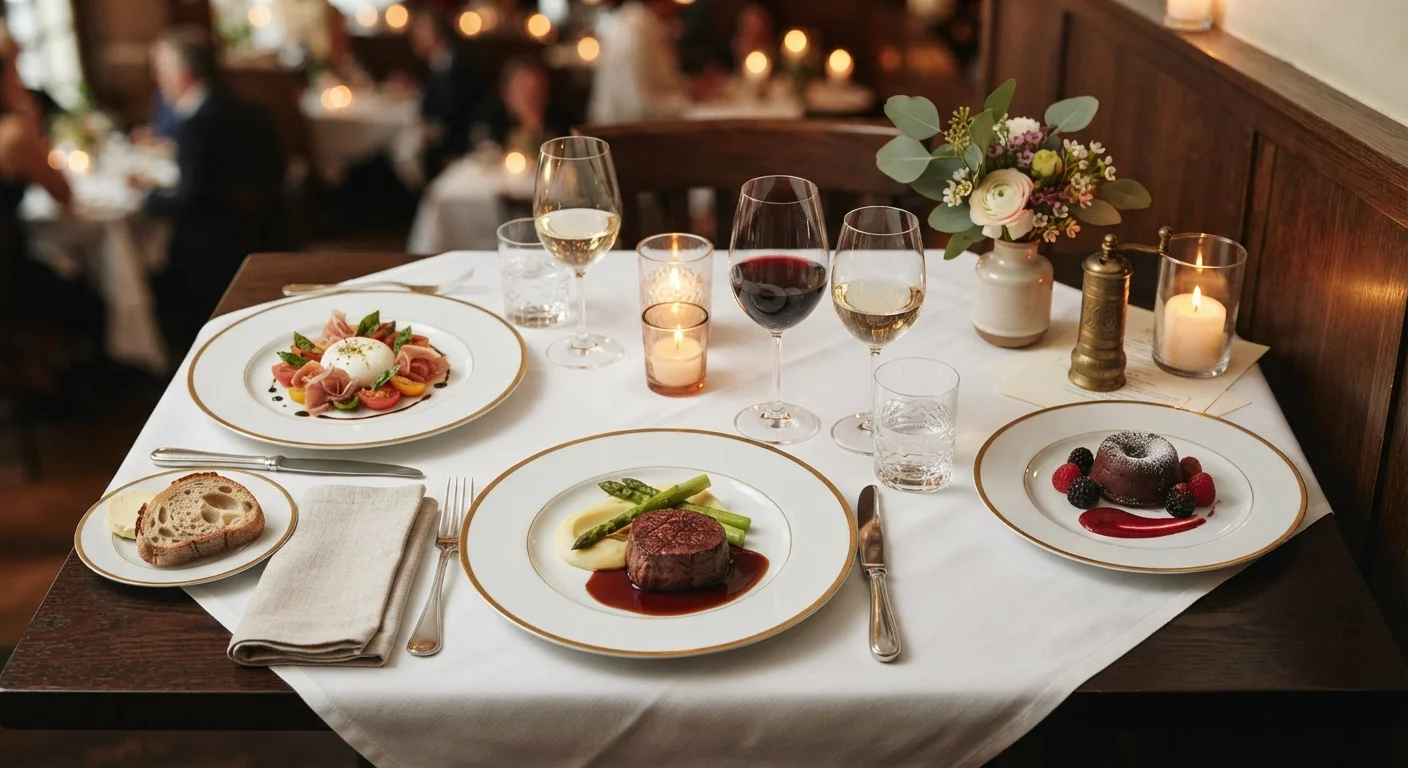
Photo credit: SkripTee.com | Search. Explore. Learn.
In this article
Appetisers, mains, palate cleansers, desserts — understand the logic behind meal pacing and how courses are designed to flow.
Key Takeaways
- Courses are sequenced to build appetite gradually, not simply to add more food.
- Appetizers prime digestion and set flavor expectations for the meal ahead.
- Palate cleansers reset taste perception between rich or contrasting courses.
- Desserts are engineered to provide a satisfying close, not just sweetness.
- Knowing the logic of pacing helps you order smarter and spend more intentionally.
- Casual and fine dining follow the same underlying structure at different levels of formality.
Why Courses Exist at All
A restaurant meal isn't simply a collection of dishes - it's a managed sequence. The multi-course format exists because eating large amounts of food at once overwhelms the palate and the digestive system. By spacing distinct flavors, textures, and portion sizes across a progression, restaurants create contrast, sustain interest, and give diners time to register satiety gradually.
This logic applies whether you're at a neighborhood bistro or a formal fine dining room. As explored in what changes between dining tiers, the formality and elaborateness of the sequence shifts by setting - but the underlying architecture remains consistent.
15-20 min
Time for satiety signals to reach the brain after eating begins
Appetite physiology research indicates a delay of roughly 15 to 20 minutes between the start of eating and the brain registering fullness, underlining the value of paced courses.
3-4
Courses in a typical Western restaurant meal
Most US restaurant menus are structured around a starter, main, and dessert framework, with soup or salad as an optional intermediate course.
The Function of Each Course
Amuse-bouche and appetizers open the meal with intention. An amuse-bouche - a complimentary kitchen bite - announces the chef's palate. Appetizers (or starters) are deliberately light: they stimulate digestive enzymes, prime taste receptors, and set flavor expectations. Ordering a heavily rich starter often flattens the experience of the main.
Soup and salad courses serve as transitions. A broth-based soup warms and hydrates; a simple dressed salad introduces acid to awaken the palate. These courses are often optional but contribute meaningfully to pacing.
The main course is where protein and complexity take center stage. It carries the highest caloric density and is typically the most expensive item. Understanding how a kitchen builds flavor - through sauce, reduction, or accompaniment - helps you make more informed choices. For more on reading what a menu actually signals, see decoding restaurant menu language.
Palate cleansers appear in longer menus between the fish and meat courses, or before dessert. A lemon sorbet or light granita neutralizes lingering fats and strong flavors, resetting perception so the next course lands cleanly.
Dessert closes the arc. Well-designed desserts balance sweetness with acid or bitter elements - think a tart lemon tart or a chocolate dish with sea salt - to avoid cloying fatigue. The dessert course is also when beverages like dessert wine or digestifs traditionally appear, as covered in beverage pairing guides.
Pair Beverages to the Course, Not Just the Meal
Each course creates a different flavor context. A sparkling wine or light cocktail suits starters; a fuller red or white complements most mains; dessert wines or digestifs work best after the sweet course. Thinking course-by-course rather than choosing one wine for the whole meal tends to produce better pairings and a more satisfying overall experience.
Pacing: The Invisible Architecture
Pacing is what separates a memorable meal from a mechanical one. In well-run restaurants, kitchen and front-of-house staff coordinate to ensure each course arrives when the previous one has been appreciated but not rushed. Gaps of roughly 10 to 20 minutes between courses are common in mid-range and fine dining settings.
As a diner, you have more control over pacing than many realize. Communicating with your server - whether you want courses spaced out or prefer a quicker meal - is both acceptable and appreciated. This is particularly relevant for large group dinners, where course timing requires additional coordination.
Pacing also affects how much you eat. Research in appetite physiology consistently shows that slower eating allows satiety signals from the gut to reach the brain - a process that takes roughly 15 to 20 minutes after eating begins. A meal structured with deliberate pauses naturally supports more attuned eating.
Pacing Varies by Cuisine and Setting
Japanese omakase, French tasting menus, and traditional Middle Eastern feasts all use multi-course structures, but the pacing logic differs significantly. Omakase courses can arrive every few minutes; a Moroccan diffa may layer dishes over several hours. When dining in an unfamiliar culinary tradition, asking your server about the expected flow is a practical and respectful move.
Using Course Structure to Order Smarter
Understanding meal architecture has practical benefits at the table. If you're ordering à la carte, knowing that appetizers are designed to be light means one starter between two people often suffices. Skipping a palate cleanser course rarely diminishes a three-course meal. And recognizing that desserts are designed as a finale - not a necessity - lets you make that call based on genuine appetite rather than habit.
Budget-conscious diners will find that working with course logic, rather than against it, often leads to more satisfaction with less spend. Dining out on a budget is far easier when you understand which courses anchor the experience and which are supplementary.
For those navigating structured formats like tasting menus or prix fixe, how each menu format works offers a practical breakdown of what to expect in terms of choice, commitment, and cost.
Frequently Asked Questions

Author
Food Editorial Team
Food Editorial Team is the collective byline for our editorial team and contributor network. Articles published under this byline or an editorial pen name are researched, written, and reviewed according to our editorial standards for clarity, consistency, and independence before publication.
View all articles →