
Navigating a Wine List When You're Not a Wine Expert
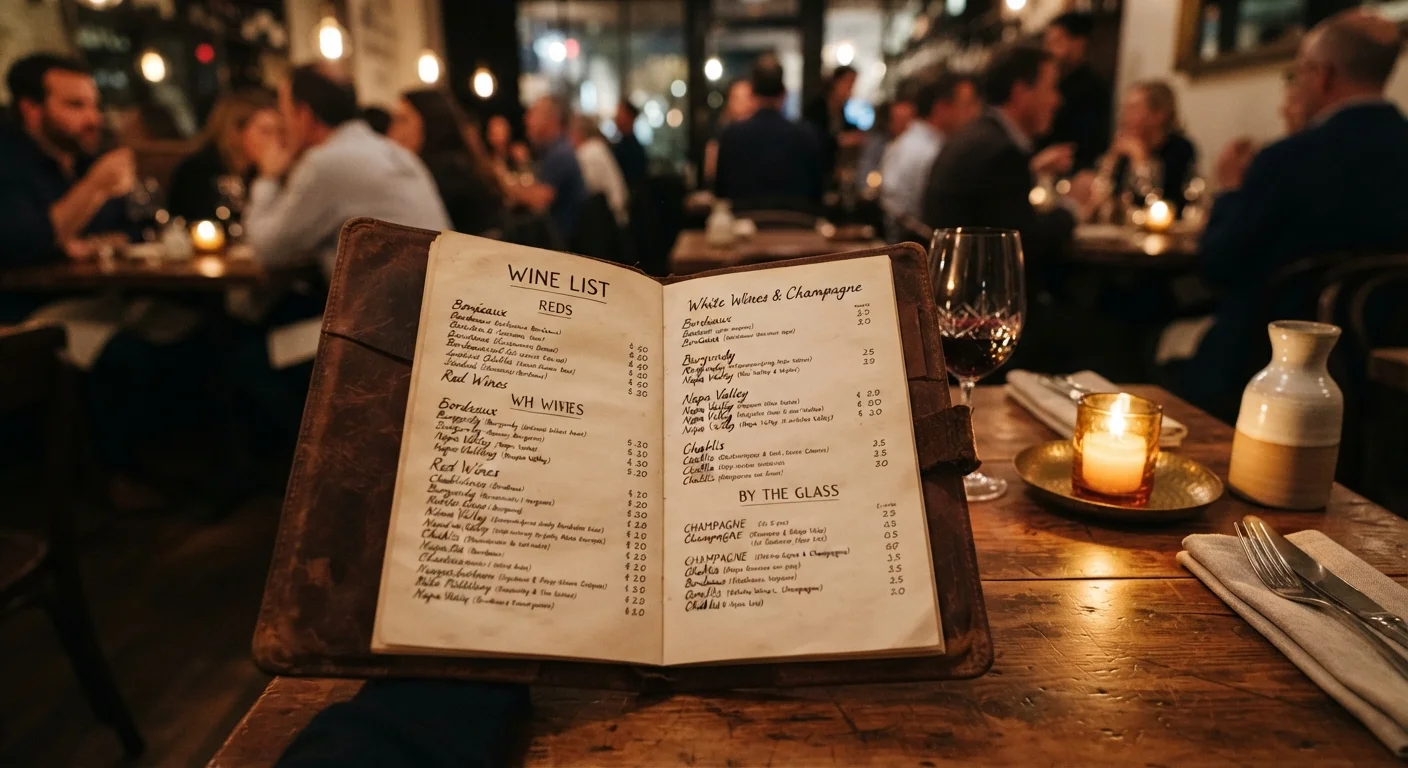
Photo credit: SkripTee.com | Search. Explore. Learn.
In this article
You don't need to know every grape to order well. Here's how to read a wine list, ask the right questions, and avoid common missteps.
Key Takeaways
- Most wine lists are organized by region, grape variety, or style - understanding the structure helps you navigate faster.
- You don't need to memorize grape names; knowing your flavor preferences is enough to order well.
- Sommeliers and servers are trained to help - giving them a budget and a style preference is the most effective approach.
- Classic food-and-wine pairing rules offer useful starting points but are not rigid requirements.
- Mid-list wines often represent better value than the cheapest or most expensive options.
How Wine Lists Are Organized
Before you can use a wine list, it helps to understand how it's built. Most restaurant wine lists follow one of three organizational patterns: by region (Burgundy, Napa Valley, Tuscany), by grape variety (Chardonnay, Cabernet Sauvignon, Pinot Noir), or by style (light whites, full-bodied reds, sparkling). Some combine all three.
Sparkling wines and Champagne typically appear first, followed by whites, then rosés, then reds, with dessert wines or fortified wines at the end. By-the-glass options are usually listed separately from bottles. Once you recognize this structure, the list becomes far less overwhelming - you can skip directly to the section that matches what you want.
For a deeper understanding of what the labels on those bottles are actually communicating, see The Anatomy of a Wine Label.
Key Terms You'll Actually Encounter
Vintage
The year the grapes used to make a wine were harvested. Vintage matters more in regions where growing conditions vary significantly from year to year.
Appellation
A legally defined geographic region where grapes are grown. It's a signal of where a wine comes from and often implies certain production standards.
Tannin
A naturally occurring compound found in grape skins, seeds, and stems that creates a dry, slightly grippy sensation in the mouth. Common in red wines like Cabernet Sauvignon.
Varietal
A wine named after the primary grape variety used to make it, such as Chardonnay or Merlot. Most New World wines (from the U.S., Australia, etc.) are labeled this way.
Residual Sugar
The natural grape sugar that remains in a wine after fermentation. Higher residual sugar makes a wine taste sweeter; lower levels produce a drier wine.
By the Glass
A single serving of wine, typically 5-6 ounces, poured to order. It lets diners try different wines or match each course without committing to a full bottle.
Wine lists routinely use shorthand that can feel exclusive but is actually straightforward once decoded. Vintage is just the harvest year. Appellation refers to the legally defined geographic area where the grapes were grown - it's a quality and origin signal, not a style descriptor. Varietal means the wine is named after its primary grape. Blend means multiple grape varieties were combined, which is common in many classic European wines.
You'll also encounter tannin (the drying, grippy sensation in red wines), acidity (the bright, refreshing quality in whites and some reds), and residual sugar (how sweet the wine is after fermentation). Knowing these three concepts helps you describe what you do or don't enjoy to a server.
How to Use the Sommelier (Without Feeling Awkward)
A sommelier or knowledgeable server is genuinely one of the most useful resources at a restaurant - and most diners underuse them. The most effective approach is to give them two pieces of information: a style preference and a rough budget.
Style preference doesn't require technical language. Saying "I usually like something dry and not too heavy" or "I tend to enjoy wines that are a bit fruity and smooth" gives them enough to work with. For budget, pointing to a price on the list and saying "around here" is perfectly acceptable and widely practiced. You're not obligated to justify your budget.
Give Two Pieces of Information
When asking for help, lead with your flavor preference and your budget - that's all a good sommelier needs. You don't need to know grape names or vintages. The more specific you are about what you enjoy or want to avoid (e.g., 'nothing too tannic' or 'something with a bit of sweetness'), the better the recommendation you'll receive.
If the restaurant has a beverage program curated around its menu - common in farm-to-table or regional cuisine spots - the staff are often especially enthusiastic about talking through pairings. Leaning into that can elevate your entire meal. For more on how the dining experience fits together, see Why Your Restaurant Experience Keeps Falling Flat.
Pairing Wine With What You're Eating
Classic pairing guidelines exist for a reason - they reflect real relationships between flavor compounds in food and wine. Light-bodied whites with high acidity (like Pinot Grigio or Sauvignon Blanc) tend to complement delicate fish and vegetables. Fuller whites like oaked Chardonnay hold their own against richer dishes like roasted chicken or creamy pasta. Light reds work with charcuterie and medium-weight proteins; bigger reds with tannin match well against fatty or grilled red meats.
That said, these are starting points, not rules. Regional traditions - drinking the wines of a region with its local cuisine - often produce excellent results and are a reliable shortcut. And personal preference always takes precedence over convention. If you enjoy a particular wine with a particular dish, that pairing is valid regardless of what any guide says.
Curious about other beverage choices beyond wine? The Beverages Explained hub covers everything from coffee to craft beer in plain language.
Common Missteps and How to Avoid Them
A few patterns consistently lead to disappointing wine choices at restaurants. The first is defaulting to the least expensive option without asking any questions - this can work out fine, but it's essentially guessing. A more effective approach is to tell your server your budget and ask what they'd recommend in that range.
The second misstep is over-ordering. A full bottle is approximately five standard pours. If you're ordering for two people with different preferences, by-the-glass selections can give each person something better suited to their taste and their dish.
Don't Assume Cheaper Means Worse
Price on a wine list reflects many factors beyond quality, including import costs, rarity, and markup strategy. A mid-priced wine from a lesser-known region can easily outperform a more expensive, heavily marketed label at the table. If value matters to you, say so - restaurant staff can point you toward wines that punch above their price.
Finally, avoid treating wine as a status signal rather than a complement to your meal. Ordering the most expensive bottle when you'd genuinely enjoy a mid-list option doesn't improve the experience. For strategies on getting great dining experiences without unnecessary spending, Dining Out on a Tight Budget Without Sacrificing the Experience covers the ground clearly.
Frequently Asked Questions

Author
Food Editorial Team
Food Editorial Team is the collective byline for our editorial team and contributor network. Articles published under this byline or an editorial pen name are researched, written, and reviewed according to our editorial standards for clarity, consistency, and independence before publication.
View all articles →