
Things People Assume About Restaurant Kitchens That Aren't True
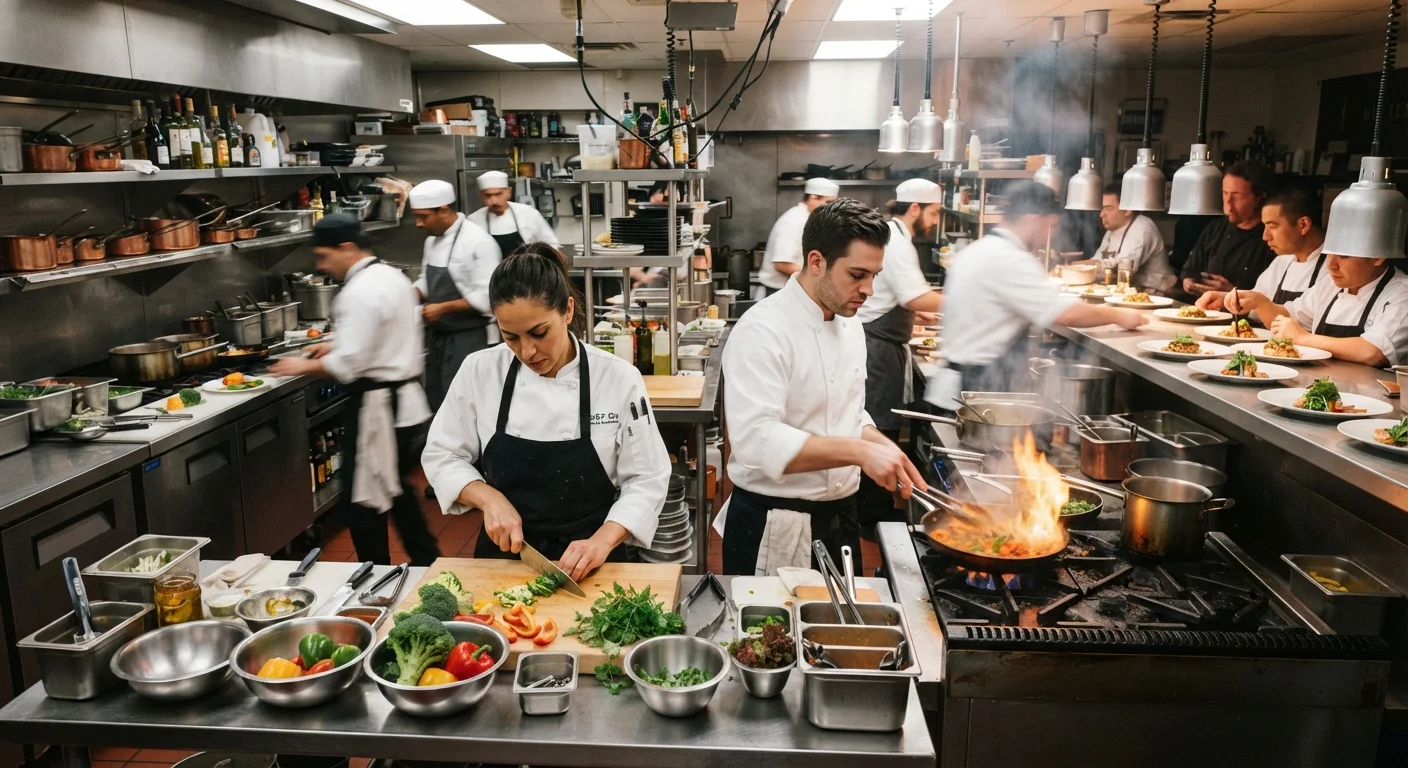
Photo credit: SkripTee.com | Search. Explore. Learn.
In this article
Separating the popular myths from reality: what 'fresh,' 'homemade,' and 'seasonal' actually mean when a kitchen uses them.
Key Takeaways
- Menu terms like 'fresh,' 'homemade,' and 'seasonal' have loose, often industry-specific definitions.
- High-volume restaurants rely on prep work, batch cooking, and some pre-made components - and that's standard practice.
- Health inspection scores reflect a single day's snapshot, not a kitchen's ongoing cleanliness standards.
- Understanding how professional kitchens actually operate helps diners set realistic expectations and ask better questions.
Why Restaurant Kitchen Myths Persist
Most diners never see the inside of a professional kitchen, which leaves plenty of room for assumptions to fill the gap. Some of those assumptions are flattering - imagining a chef hand-crafting every element of every dish from scratch. Others are alarming - picturing unsanitary conditions or deliberate deception. The reality sits in more pragmatic territory.
Professional kitchens operate under tight margins, strict health codes, and relentless time pressure. The practices that emerge from those constraints look nothing like cooking at home, and that's precisely why so many popular beliefs about them miss the mark. Knowing what terms like 'fresh' and 'homemade' actually mean in a commercial context - and what health ratings genuinely measure - makes you a more informed diner. For a related look at how misinformation shapes our food choices more broadly, see our breakdown of persistent nutrition myths.
Common Misconceptions, Corrected
The myths below are drawn from widely held assumptions about what restaurants do (and don't do) behind the scenes. Each one has a basis in wishful thinking, misread marketing, or genuine unfamiliarity with commercial food service.
Myth
'Fresh' means the ingredient was never frozen or preserved in any way.
Fact
In most regulatory and industry contexts, 'fresh' has no single legal definition and does not automatically exclude prior freezing.
The U.S. Food and Drug Administration defines 'fresh' narrowly only for raw, unprocessed produce - and even then, enforcement is limited. For proteins, the term is largely unregulated on menus. Many kitchens receive fish that was frozen at sea immediately after catch (a practice that can actually preserve quality better than days of refrigerated transport) and legitimately describe it as fresh. When freshness is a priority for you, ask specifically whether the item was previously frozen rather than relying on menu language alone.
Myth
'Homemade' means everything on the plate was made from scratch in that specific kitchen.
Fact
'Homemade' on a menu typically signals in-house preparation but does not require that every component was made from raw ingredients on-site.
A restaurant might make its sauces, pastries, or stocks in-house while using commercially produced pasta, pre-portioned proteins, or purchased stocks for other dishes. The term 'house-made' is somewhat more precise - it signals that the item was prepared on the premises - but neither phrase is legally standardized in the U.S. for restaurant menus. If scratch preparation matters to you, 'made from scratch in-house' is the more specific question to ask. Kitchens that genuinely do this are usually proud to say so.
Myth
'Seasonal' means the kitchen changes its menu every few weeks based on what's at peak locally.
Fact
'Seasonal' is a marketing term that varies enormously in practice - from genuine farm-direct sourcing to purchasing whatever the broadline distributor currently labels as seasonal.
True seasonality requires consistent relationships with local producers, menu flexibility, and a willingness to absorb supply variability. That level of commitment exists in many independent restaurants, but it is far less common in higher-volume or chain settings where menu consistency is a priority. A dish labeled 'seasonal squash' may have traveled across the country from a large-scale operation. Asking 'where does this come from?' is a more revealing question than reading seasonal language on the menu at face value.
Myth
A perfect health inspection score means the kitchen is always clean and safe.
Fact
Health inspection scores reflect conditions on a single inspection day and are not a continuous measure of kitchen hygiene.
Inspections are typically unannounced but infrequent - many jurisdictions conduct them once or twice annually per establishment. A kitchen can pass with a high score on inspection day and have lapses before or after. Conversely, a kitchen with a minor violation on record may maintain excellent daily standards. Scores are a useful baseline, but they work best when read alongside inspection reports (which often list the specific violations found) rather than treated as a definitive safety stamp. Learn how inspectors actually calculate hygiene ratings for fuller context.
Myth
Restaurant kitchens cook each dish entirely to order, from raw ingredients, every time.
Fact
Virtually all professional kitchens rely on extensive prep work, batch cooking, and mise en place completed hours before service.
'Mise en place' - a French culinary term meaning 'everything in its place' - refers to the practice of prepping and partially cooking ingredients before dinner service begins. Stocks are made in large batches, proteins are pre-portioned, sauces are prepared in advance, and vegetables may be blanched and held. This isn't a shortcut; it's the engineering that makes it possible to serve dozens of dishes simultaneously in under 20 minutes. A kitchen that cooked everything to order from scratch would be slower, less consistent, and operationally unsustainable.
Understanding these realities doesn't diminish a restaurant meal - it clarifies what you're actually paying for. See also what restaurant hygiene ratings actually measure for a deeper look at inspection scoring.
What This Means for Diners
Armed with a clearer picture of how professional kitchens work, you can ask smarter questions and recalibrate expectations before you sit down. If sourcing matters to you, ask your server directly: 'Is this made in-house?' or 'Where does the fish come from?' Reputable kitchens will answer honestly.
~60%
U.S. restaurants that fail within their first year
According to data frequently cited by the National Restaurant Association, restaurant failure rates underscore the thin margins that drive many of the operational practices diners misread as deceptive.
1-2x/year
Typical health inspection frequency per establishment
Most U.S. jurisdictions conduct unannounced inspections once or twice annually, meaning scores capture a narrow window of a kitchen's ongoing operation.
When a restaurant's execution falls flat, the issue often has less to do with deception and more to do with the gap between menu ambition and operational capacity - a dynamic explored in detail in our guide to why restaurant experiences disappoint. Understanding how a well-structured restaurant meal is designed can also help you appreciate what good kitchen planning actually looks like when it comes together.
Menu Language Is Not Regulated Like Food Labels
Unlike packaged food, restaurant menu descriptions in the U.S. are subject to limited federal oversight. Terms like 'fresh,' 'natural,' 'artisan,' and 'homemade' carry no standardized legal meaning in most dining contexts. When specific sourcing or preparation methods matter to your health, dietary needs, or values, ask staff directly rather than relying on menu descriptors alone. Most restaurants with genuine quality claims are glad to back them up.

Author
Food Editorial Team
Food Editorial Team is the collective byline for our editorial team and contributor network. Articles published under this byline or an editorial pen name are researched, written, and reviewed according to our editorial standards for clarity, consistency, and independence before publication.
View all articles →