
Airport Security in Plain Language: What the Rules Actually Mean
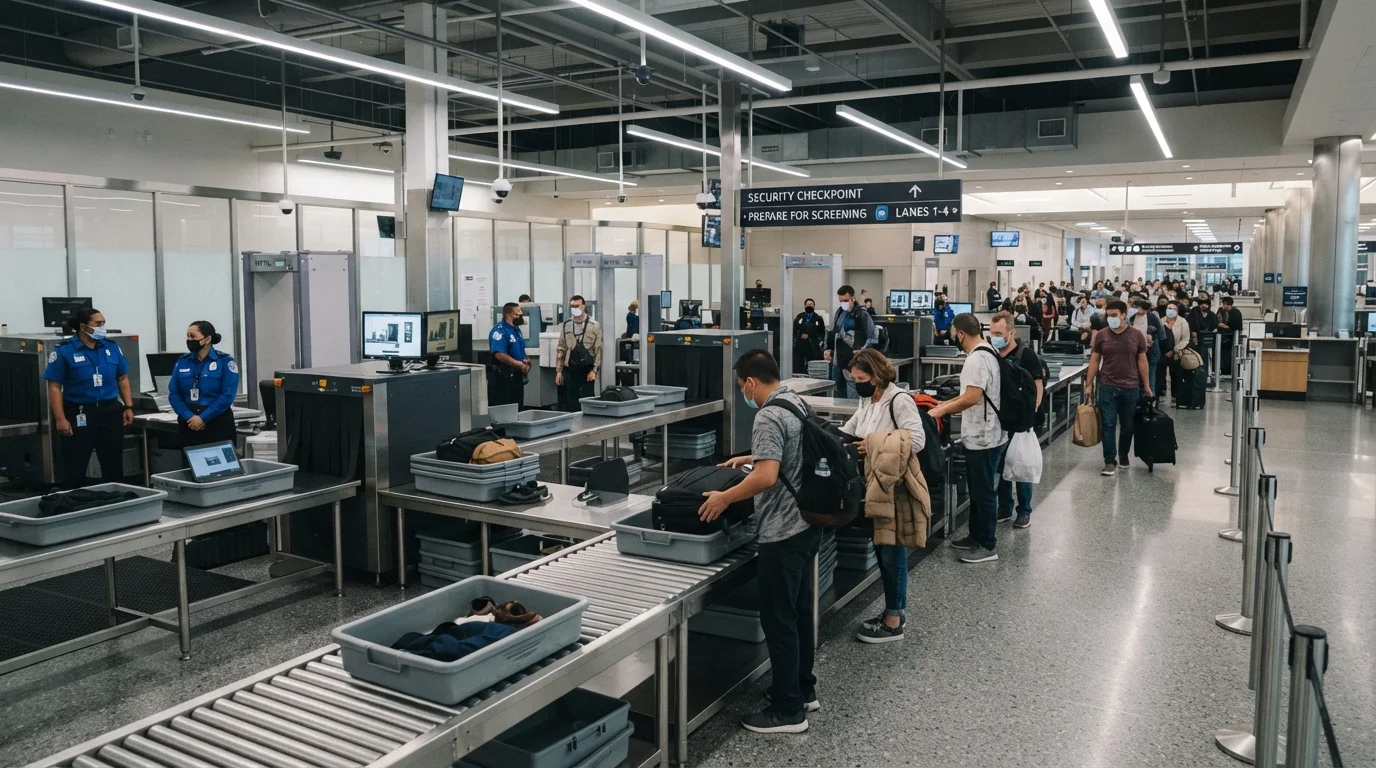
Photo credit: SkripTee.com | Search. Explore. Learn.
In this article
A clear breakdown of common airport security requirements — liquids, electronics, footwear — and the reasoning behind each rule.
Key Takeaways
- The 3-1-1 liquids rule limits containers to 3.4 oz (100ml), all fitting in one clear quart-sized bag.
- Laptops and large electronics must be removed from bags and placed in a separate bin at standard lanes.
- Shoes must be removed at U.S. checkpoints unless you have TSA PreCheck or are under 12 or over 75.
- Medically necessary liquids and medications are exempt from the 3-1-1 limit but should be declared.
- Rules can vary between airports and countries - always verify before an international trip.
The 3-1-1 Liquids Rule, Decoded
The rule that confuses most travelers is the liquid restriction for carry-on bags. The shorthand is 3-1-1: each liquid, gel, aerosol, cream, or paste must be in a container of 3.4 oz (100ml) or less; all containers must fit in one clear, quart-sized zip-top bag; and each passenger is limited to one such bag.
The restriction exists because liquid explosives can be concealed in ordinary-looking containers. Limiting volume reduces the risk while keeping travel practical. It's worth noting the rule applies to the container size, not the quantity of liquid inside - a nearly empty 12 oz bottle still fails the check.
Pack Your Liquids Bag Last and on Top
Place your quart-sized liquids bag at the very top of your carry-on before you reach the checkpoint. When it's time to send the bag through, you can pull it out in seconds without digging through your belongings. This small habit consistently reduces time at the conveyor belt and avoids holding up the line.
Exceptions apply to medically necessary liquids (including infant formula and breast milk), which may exceed 3.4 oz and should be declared at the checkpoint. For more on carrying medications specifically, see our guide on traveling with medications across borders.
Electronics, Shoes, and Belt Buckles: Why They Come Out
Standard checkpoint lanes require passengers to remove laptops and tablets from bags and place them flat in a bin. The reasoning is practical: dense electronics create shadows on X-ray images, making it difficult for officers to see what else is inside a bag. A clear, isolated view of the device is faster and more reliable for both the screener and the traveler.
Shoes are screened separately because the soles - particularly thick or composite-material soles - can conceal items that blend into an X-ray image of a foot. This requirement became standard in U.S. airports following a 2001 incident involving a concealed explosive in a shoe.
Metal belt buckles, coins, and keys trigger metal detectors and can slow the line. Placing them in your carry-on or a bin before reaching the scanner is standard practice. At TSA PreCheck lanes, shoes, belts, and laptops can stay in place - a meaningful time-saver for frequent travelers.
TSA PreCheck Changes the Equation
Travelers enrolled in TSA PreCheck use dedicated lanes where shoes, belts, and light jackets stay on, and laptops and compliant liquids remain in bags. Enrollment involves a background check and fee, but for frequent travelers the time savings are substantial. Global Entry, which includes PreCheck, adds expedited U.S. customs re-entry for international travelers.
What's Actually Prohibited - and What's Just Restricted
Many travelers conflate prohibited items with restricted ones. The distinction matters. Prohibited items cannot enter the airport's secure area under any circumstances - these include firearms not declared and stored in checked luggage per federal procedures, certain knives, and hazardous materials like flammable gases.
Restricted items, by contrast, may be allowed under specific conditions. A pocketknife with a blade under a certain length may be permitted in checked baggage but not carry-on. Lithium batteries for cameras and laptops are typically allowed in carry-on bags (not checked luggage, due to fire risk) within watt-hour limits.
3.4 oz
Maximum liquid container size in carry-on bags
This 100ml limit is aligned with international aviation security standards adopted by many countries following mid-2000s threat assessments.
~2 million
Passengers screened daily at U.S. airports
According to TSA data, the agency screens approximately two million travelers per day across hundreds of U.S. airports.
Understanding the category helps you pack smarter. The TSA maintains a searchable database - commonly called "What Can I Bring?" - where travelers can look up specific items before packing. Consulting it before a trip removes guesswork. For a comprehensive packing approach, see our complete pre-departure packing checklist.
Travelers heading internationally should also be aware that rules can change at the connecting country's checkpoint. For broader trip preparation, our international travel planning resource covers documentation and customs requirements end to end.
Frequently Asked Questions

Author
Travel Editorial Team
Travel Editorial Team is the collective byline for our editorial team and contributor network. Articles published under this byline or an editorial pen name are researched, written, and reviewed according to our editorial standards for clarity, consistency, and independence before publication.
View all articles →