
Non-Alcoholic Spirits and Beer: What They Are and How They're Made
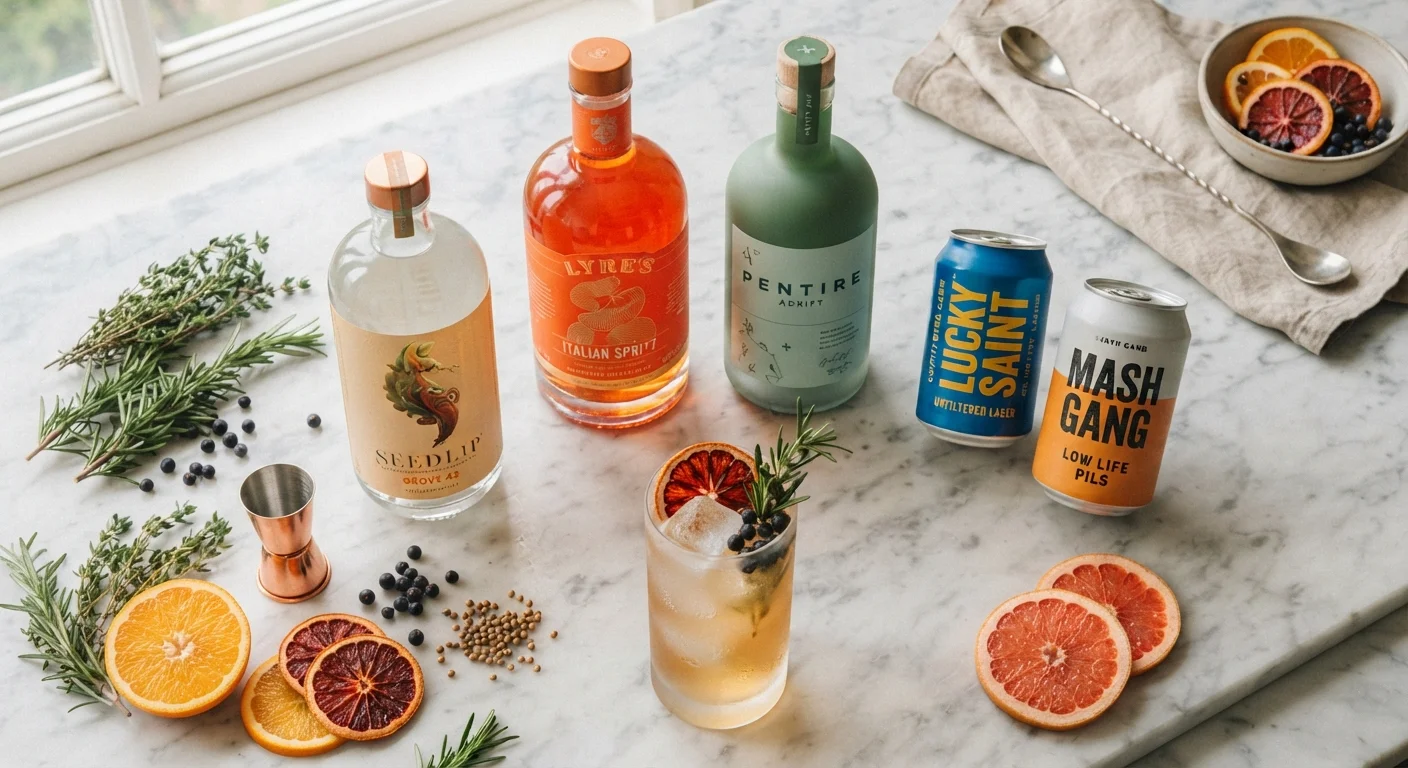
Photo credit: SkripTee.com | Search. Explore. Learn.
In this article
The no-and-low alcohol category has grown rapidly. Learn the production methods behind dealcoholised and alcohol-free drinks.
Key Takeaways
- Non-alcoholic beers and spirits contain 0.5% ABV or less under U.S. labeling standards.
- Two main production approaches exist: dealcoholization of a finished product, or alcohol-free formulation from the start.
- Vacuum distillation and reverse osmosis are the most common dealcoholization methods for beer.
- Non-alcoholic spirits rely heavily on botanicals, distillate concentrates, and adaptogens rather than ethanol.
- Flavor complexity in NA drinks has improved significantly as production technology has advanced.
- Residual trace alcohol means these products may not be appropriate for everyone - check with a healthcare provider if unsure.
Why the No-and-Low Category Exists
Consumer interest in reducing alcohol intake - whether for health, lifestyle, pregnancy, religious, or personal reasons - has driven rapid growth in the no-and-low alcohol segment. According to NielsenIQ data cited widely in the beverage industry, the non-alcoholic beer, wine, and spirits category has posted double-digit sales growth in recent years across U.S. retail channels.
But "non-alcoholic" is not a single thing. It covers a wide spectrum: dealcoholized beers brewed conventionally and then stripped of ethanol, craft NA beers brewed specifically to stop fermentation early, and a newer class of spirit alternatives that never contained alcohol to begin with. Understanding the difference helps consumers choose with clarity. To understand why ABV thresholds matter on labels, see our explainer on what ABV numbers actually mean.
0.5%
Maximum ABV for U.S. non-alcoholic labeling
This threshold is set under U.S. federal standards; beverages at or below this level may be labeled "non-alcoholic" under TTB and FDA guidelines.
Top 10%
Fastest-growing beverage segments by retail sales
NielsenIQ and IWSR data have consistently placed non-alcoholic beer, wine, and spirits among the fastest-growing segments in U.S. off-premise retail in recent years.
3
Primary dealcoholization methods used commercially
Vacuum distillation, reverse osmosis, and arrested fermentation represent the dominant industrial approaches to producing NA beer globally.
How Non-Alcoholic Beer Is Made
There are two primary routes to producing NA beer. The first involves brewing a conventional beer - fermenting malted barley, hops, water, and yeast - and then removing the alcohol afterward. The second involves manipulating fermentation itself to produce very little alcohol from the outset.
Dealcoholization Methods
- Vacuum distillation: By lowering atmospheric pressure inside a vessel, producers can cause ethanol to boil off at temperatures below 80°F, preserving volatile aromatics that heat would otherwise destroy. This is one of the most flavor-sensitive methods available.
- Reverse osmosis: Beer is passed through a fine membrane that separates water and alcohol from larger flavor molecules. The alcohol is then removed from the permeate, and the flavor concentrate is blended back with water. This method is highly controllable and widely used in large-scale production.
- Arrested fermentation: Some brewers stop fermentation early - before yeast converts much sugar to alcohol - by chilling the beer or filtering out the yeast. This avoids dealcoholization entirely but can result in a sweeter, less complex profile.
If you're curious about how conventional beer is fermented before these processes apply, our guide on home brewing beer basics walks through the full process.
Reading NA Beer Labels Carefully
Not all non-alcoholic beers are created equal. Look for the stated ABV on the label - "non-alcoholic" means ≤0.5% ABV in the U.S., while "alcohol-free" can mean 0.0% in some contexts. If you need to avoid all alcohol for medical, religious, or recovery reasons, verify the specific ABV with the producer rather than relying on the marketing label alone.
How Non-Alcoholic Spirits Are Formulated
Non-alcoholic spirits occupy a different category than dealcoholized beer. Most are never alcoholic to begin with. Instead, producers build complex flavor profiles using a toolkit of botanicals, herbs, spices, bitter compounds, and sometimes adaptogens or nootropic ingredients.
Common formulation approaches include:
- Cold maceration: Botanicals are steeped in cold water or a non-alcoholic carrier to extract flavor compounds without ethanol as a solvent.
- Distillate concentrates: Some producers do distill individual botanicals - such as juniper, citrus peel, or cardamom - and use only the very small resulting concentrate, which may contain trace alcohol, blended into an otherwise alcohol-free base.
- Carbonation and mouthfeel additives: Because alcohol contributes to the characteristic "burn" and body of spirits, NA alternatives often use carbonation, capsaicin, or certain acids to approximate that sensation.
The result can be remarkably sophisticated. Gin-style NA spirits, for example, lean heavily on juniper and citrus botanicals, while whisky-style alternatives may use smoked tea, vanilla, and oak extracts. Unlike traditionally fermented beverages, these products bypass fermentation almost entirely.
Trace Alcohol in Formulated NA Spirits
Even non-alcoholic spirits formulated without fermentation can contain trace alcohol if botanical distillate concentrates are used in the recipe. Consumers who need to avoid all alcohol - including those who are pregnant, in recovery, or managing certain medical conditions - should review full ingredient and process disclosures and consult a healthcare provider before consuming these products.
Flavor Trade-Offs and What to Expect
Alcohol does more than intoxicate - it carries aroma compounds, contributes body, and acts as a solvent that makes certain flavors perceptible to the palate. Removing it, or never using it, creates real formulation challenges. Lagers and wheat beers tend to transition to NA formats more successfully than heavily hopped or high-ABV styles, because their flavor profiles rely less on alcohol as a delivery mechanism.
Non-alcoholic spirits can be nuanced and genuinely complex, but they typically taste different from - rather than identical to - their alcoholic counterparts. Consumers exploring the category benefit from approaching NA products on their own terms rather than as direct substitutes. Pairing them with bubbly mixers, for example, can enhance the drinking experience significantly - for a rundown on the options, see our guide to sparkling water types.
Frequently Asked Questions

Author
Food Editorial Team
Food Editorial Team is the collective byline for our editorial team and contributor network. Articles published under this byline or an editorial pen name are researched, written, and reviewed according to our editorial standards for clarity, consistency, and independence before publication.
View all articles →