
Understanding Alcohol by Volume: What ABV Numbers Tell You
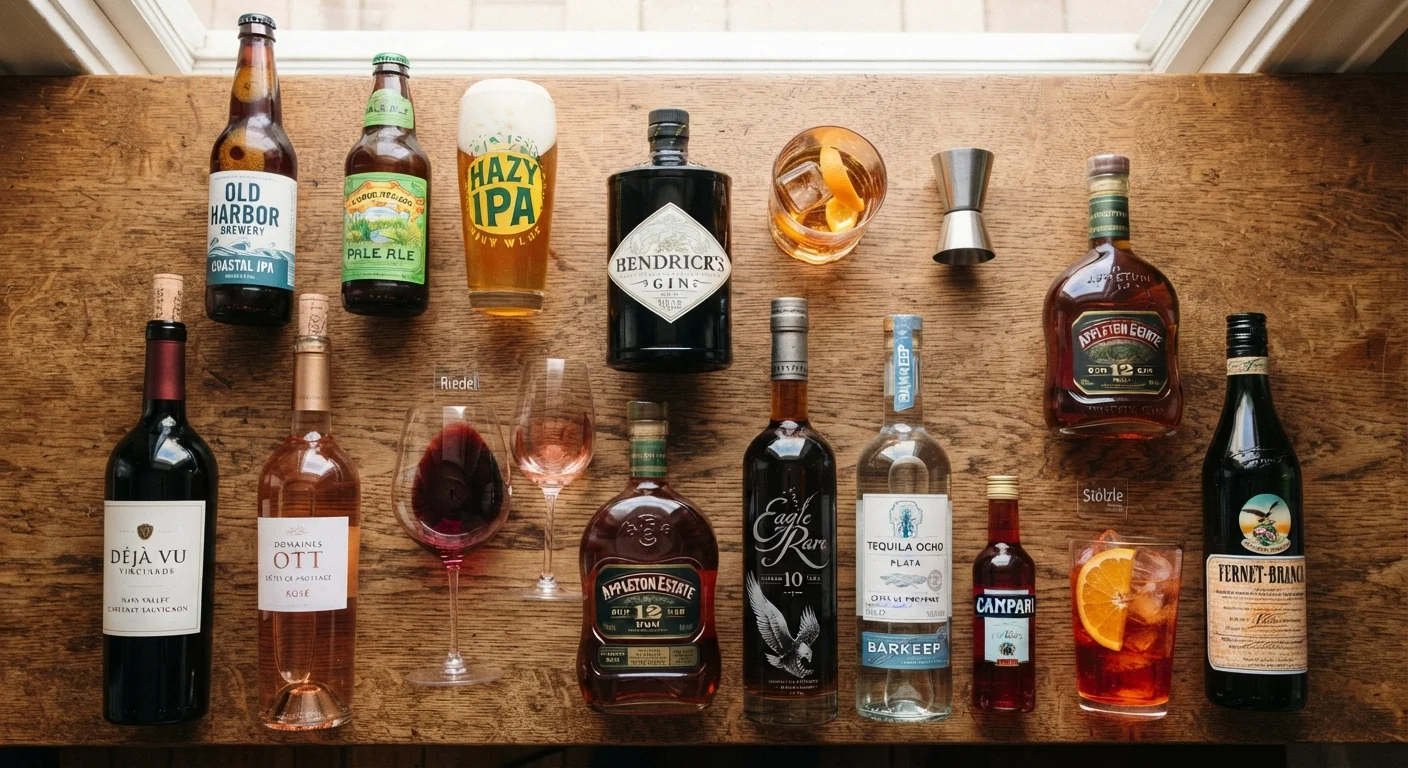
Photo credit: SkripTee.com | Search. Explore. Learn.
In this article
ABV figures appear on every bottle, but what do they mean in practice? Learn how alcohol strength is measured and why it matters.
Key Takeaways
- ABV tells you the percentage of pure ethanol in a beverage by volume.
- Typical ranges vary widely: beer 3-10%, wine 10-15%, spirits 35-50%+.
- Higher ABV means a smaller serving delivers the same alcohol dose.
- ABV is not the same as proof - proof equals twice the ABV in US labeling.
- Understanding ABV helps you pace consumption and make informed choices.
- Low- and no-alcohol beverages often list ABV under 0.5% per federal standards.
How ABV Is Measured
Producers measure ABV using the relationship between a liquid's density before and after fermentation. Yeast consumes sugars and converts them into ethanol and carbon dioxide - the more sugar fermented, the higher the resulting alcohol content. Two common laboratory methods are used: hydrometry (measuring specific gravity with a hydrometer) and distillation followed by density measurement. Both produce results accurate enough to meet regulatory requirements.
In the US, the TTB requires that ABV be stated on most beverage alcohol labels, with an allowable variance of plus or minus 0.3% for beer and wine. Spirits face tighter tolerance requirements. This means a bottle labeled 13.5% ABV could legally contain anywhere from 13.2% to 13.8% - a minor difference for most consumers but meaningful for producers tracking tax obligations, since excise taxes are tied to alcohol content.
If you enjoy interpreting what's on a label more broadly, the anatomy of a wine label article walks through how ABV fits alongside vintage, region, and variety information.
Typical ABV Ranges Across Beverage Categories
Knowing the general ABV range for a category helps set realistic expectations before you pour.
5%
ABV of a typical US lager
Most standard domestic beers fall in the 4-6% ABV range, making them the most common reference point for a single standard drink calculation.
40%
ABV of most distilled spirits
Vodka, gin, rum, and whiskey are commonly bottled at 40% ABV (80 proof), the minimum legal standard for spirits in the US.
0.5%
ABV threshold for 'non-alcoholic' labeling
Under US federal standards, beverages at or below 0.5% ABV may be marketed as non-alcoholic, covering most dealcoholized beers and spirits.
- Light and session beers: 2.5-4.5% ABV - designed for longer, more relaxed drinking occasions.
- Standard lagers and ales: 4-6% ABV - the range most people encounter most often.
- Craft IPAs and strong ales: 6-10%+ ABV - flavors that push bitterness or malt can often support higher alcohol.
- Table wines: 10-15% ABV - European-style wines often run lower; New World wines and warm-climate varieties frequently land higher.
- Fortified wines (sherry, port, vermouth): 15-22% ABV - spirits are added mid-fermentation to preserve sweetness and boost strength.
- Spirits and liqueurs: 17-50%+ ABV - gin, vodka, rum, and whiskey typically sit between 35-50%, though some cask-strength expressions exceed 60%.
Understanding this spectrum is especially useful when navigating a wine list - a sommelier's recommendation for a lighter-bodied wine may also mean a lower ABV pour.
Why ABV Matters for Responsible Consumption
ABV is most practically useful when you're trying to understand how much alcohol a given serving actually contains. The concept of a standard drink - defined by the US Dietary Guidelines as approximately 14 grams of pure alcohol - depends entirely on ABV to be calculated correctly.
Calculate Your Pour Before You Drink
To estimate standard drinks in any pour, multiply the volume in ounces by the ABV percentage, then divide by 0.6. For example: 5 oz × 0.12 ABV ÷ 0.6 = 1 standard drink. This quick math works for any beverage and any glass size, helping you stay accurate regardless of how generous the pour.
Consider this: a 12 oz pour of a 5% ABV beer and a 12 oz pour of a 9% ABV IPA look identical in the glass, but the IPA delivers nearly twice the alcohol dose. Similarly, a generous 7 oz glass of 14% ABV wine contains closer to two standard drinks rather than one.
This is not about restriction - it's about accuracy. Knowing what you're consuming helps you pace your evening, plan around driving, or simply enjoy your drink more intentionally. If you're exploring the rapidly expanding world of low- and no-alcohol alternatives, understanding the baseline makes it easier to appreciate what those products remove. The non-alcoholic spirits and beer category offers full-flavor experiences at 0.5% ABV or below.
This article is for general informational purposes only and does not constitute medical or health advice. Consult a qualified healthcare professional regarding alcohol consumption and your individual health circumstances.
ABV for Home Brewers and Label Readers
If you brew at home, calculating ABV is a fundamental skill. The most widely used formula compares original gravity (OG) - the sugar density of wort before fermentation - against final gravity (FG) after fermentation is complete. A simplified version of the formula: ABV ≈ (OG − FG) × 131.25. More precise calculations use a corrected formula that accounts for the slight inaccuracy of the basic version at higher alcohol levels.
ABV Tolerances and Label Accuracy
US regulations allow a small variance between stated and actual ABV - typically ±0.3% for beer and wine, and tighter limits for spirits. In practice, this means the ABV on a label is a reliable guide, not a guarantee of exact precision. For everyday consumers, this variance is negligible; for home brewers or those tracking intake very carefully, it's worth knowing.
For label readers who aren't brewing but want to use ABV to make sense of packaged drinks, the key habit is combining ABV with serving size. A nutrition label gives you calories, carbohydrates, and other data - but the ABV figure on the front panel tells you the alcohol story the nutrition panel often doesn't emphasize. Together, these two pieces of information give a much clearer picture of what's in your glass.
For anyone curious about the hands-on side of fermentation, home brewing basics covers how yeast, grain, and time interact to build alcohol and flavor - and how brewers use ABV targets to guide their recipes from the start.
Frequently Asked Questions

Author
Food Editorial Team
Food Editorial Team is the collective byline for our editorial team and contributor network. Articles published under this byline or an editorial pen name are researched, written, and reviewed according to our editorial standards for clarity, consistency, and independence before publication.
View all articles →